

How to make 500d oxford fabric anti - static?
May 21, 2025
Leave a message
How to make 500d oxford fabric anti - static?
As a supplier of 500d oxford fabric, I understand the importance of anti - static properties in various applications. 500d oxford fabric is widely used in outdoor products, bags, and industrial applications. However, static electricity can cause problems such as attracting dust, interfering with electronic devices, and even creating safety hazards in some environments. In this blog, I will share some effective methods to make 500d oxford fabric anti - static.
Understanding the Causes of Static Electricity in 500d Oxford Fabric
Before we delve into the anti - static solutions, it's essential to understand why static electricity occurs in 500d oxford fabric. Static electricity is generated when two materials come into contact and then separate, causing a transfer of electrons. In the case of 500d oxford fabric, friction during movement, especially in dry environments, can lead to the build - up of static charges. Additionally, the chemical composition of the fabric, such as polyester which is commonly used in 500d oxford fabric, is more prone to static generation compared to natural fibers.
1. Chemical Treatment
One of the most common and effective ways to make 500d oxford fabric anti - static is through chemical treatment. There are several types of anti - static agents available in the market, and they work by either reducing the surface resistance of the fabric or by attracting moisture to the fabric surface, which helps to dissipate static charges.
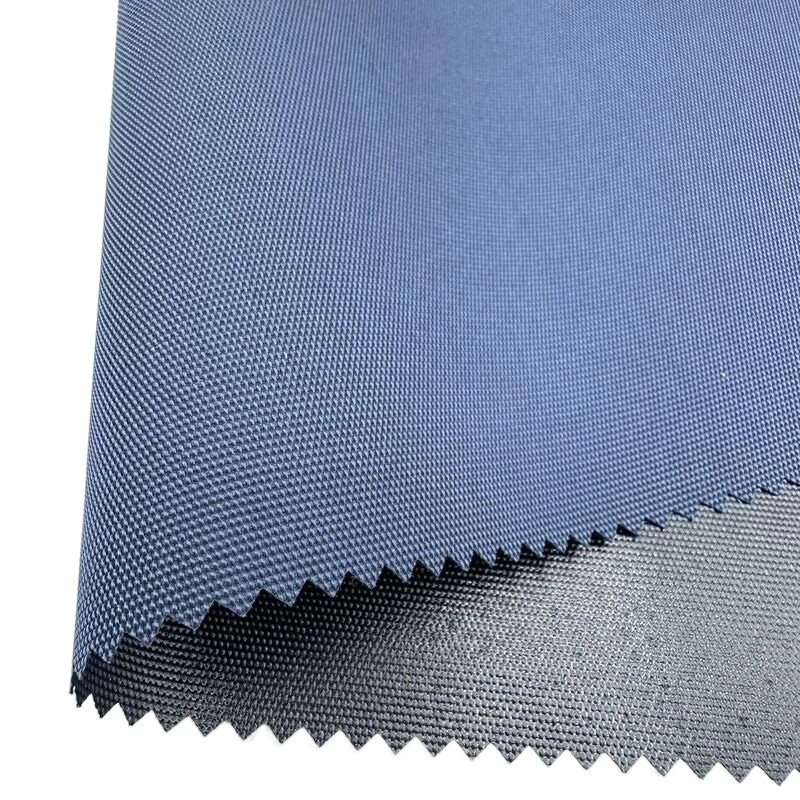

- Surfactant - based Anti - static Agents: These agents are widely used due to their low cost and good performance. Surfactants can be applied to the fabric through a padding process. During this process, the fabric is immersed in a solution containing the anti - static agent and then squeezed to remove excess liquid. After that, the fabric is dried and cured at a certain temperature. The surfactant molecules form a thin layer on the fabric surface, which can attract moisture from the air and reduce the static charge build - up. For example, cationic surfactants can provide long - lasting anti - static properties, especially in dry conditions.
- Polymer - based Anti - static Agents: Polymer - based anti - static agents offer better durability compared to surfactant - based ones. They can form a more stable and continuous film on the fabric surface. These agents are often applied through a coating process. The polymer solution is coated onto the fabric using a knife coater or a roller coater. Once the coating dries, it creates a conductive layer that can quickly dissipate static charges. Some polymer - based anti - static agents also have the advantage of being resistant to washing, which is crucial for products that need to be cleaned regularly.
2. Incorporating Conductive Fibers
Another approach to making 500d oxford fabric anti - static is by incorporating conductive fibers into the fabric structure. Conductive fibers, such as carbon fibers, metal fibers, or conductive polymer fibers, can provide a path for the static charges to flow away from the fabric.
- Blending with Conductive Fibers: During the spinning process, conductive fibers can be blended with the polyester fibers used to make 500d oxford fabric. The amount of conductive fibers added depends on the desired level of anti - static performance. A small percentage (usually around 1 - 5%) of conductive fibers can significantly reduce the static charge build - up. The blended yarns are then woven into the fabric. This method has the advantage of being more permanent compared to chemical treatment, as the conductive fibers are an integral part of the fabric structure.
- Inlaying Conductive Fibers: Instead of blending, conductive fibers can also be inlaid into the fabric during the weaving process. For example, conductive yarns can be woven in a grid pattern within the 500d oxford fabric. This creates a network of conductive paths that can effectively dissipate static charges. Inlaying conductive fibers allows for more precise control of the anti - static properties in different areas of the fabric.
3. Environmental Control
Controlling the environment where the 500d oxford fabric is used or stored can also help to reduce static electricity.
- Humidity Control: Increasing the humidity in the environment can reduce static charge build - up. Static electricity is more likely to occur in dry conditions. By maintaining a relative humidity of around 40 - 60%, the moisture in the air can help to dissipate static charges from the fabric surface. In industrial settings, humidifiers can be used to control the humidity. In domestic or small - scale applications, placing a bowl of water in the room can also slightly increase the humidity.
- Grounding: Grounding the fabric or the objects made from 500d oxford fabric can provide a direct path for the static charges to flow to the ground. For example, in industrial manufacturing processes, equipment that comes into contact with the fabric can be grounded. In some cases, products made from 500d oxford fabric, such as bags used in electronic device handling, can be designed with grounding straps.
Product Recommendations
As a 500d oxford fabric supplier, I offer a range of high - quality products with anti - static properties. Our 500D Oxford Cloth (500D*500D) is treated with advanced anti - static agents to ensure long - lasting performance. It is suitable for a variety of outdoor and industrial applications.
Another popular product is our 500D 100% Polyester Oxford Fabric. This fabric incorporates conductive fibers during the manufacturing process, providing excellent anti - static properties while maintaining the durability and strength of the 500d oxford fabric.
Conclusion
Making 500d oxford fabric anti - static is crucial for many applications. Whether through chemical treatment, incorporating conductive fibers, or environmental control, there are several effective methods available. As a supplier, we are committed to providing high - quality anti - static 500d oxford fabric to meet the diverse needs of our customers. If you are interested in purchasing our anti - static 500d oxford fabric or have any questions about our products, please feel free to contact us for further discussions and procurement negotiations.
References
- "Textile Chemistry: Fundamentals, Processes, and Testing" by Howard L. Needles.
- "Static Electricity in Industry: Detection and Control" by J. N. Lee.
- Research papers on anti - static treatment of synthetic fibers from academic journals such as "Textile Research Journal".