


Company Profile
Anhui Zijinghua New Materials Technology Co., Ltd., located in Susong County, Anhui Province, is a modern enterprise specializing in the research, development, production, and sales of 100% polyester Oxford fabric with PVC/PU/PE/TPU/TPE coatings. Its products are widely used in tool bags, luggage, tents, and other applications, and are recognized by renowned brands such as Samsonite, Johnson & Johnson, and Victorinox.
The company boasts significant advantages: first, a broad product range, encompassing both Oxford fabric and leather, suitable for a variety of applications; second, leading service, with years of industry experience and a comprehensive production management, quality control, and sales support system. Customers can email their needs and receive a prompt response; third, advanced equipment, including 600 textile machines, four printing and dyeing lines, and multiple coating, synthetic leather, and digital printing lines, enables significant daily production and fast delivery; fourth, comprehensive after-sales service, with dedicated staff available 24/7, allowing users to contact us at any time with any equipment issues.


What is 900D Oxford Fabric?
900D Oxford fabric is a heavyweight material that is commonly used for industrial and heavy-duty applications. It has a denier of 900, making it one of the strongest types of Oxford fabric available. This type of fabric is commonly used for luggage, tarpaulins, and covers that require high strength and resistance to wear and tear. 900D fabric is also water-resistant and UV-resistant, making it ideal for outdoor applications.
Benefits of 900D Oxford Fabric
Durability
Oxford's unique basket weave creates a thick, strong and durable fabric.
Wrinkle resistant
The fabric’s relatively thick weave means that it is less prone to wrinkles than other fabrics.
Versatility
Oxford fabric can be smart or smart casual depending on the type. Thicker variants err casual while finer variants are more formal.
Breathability
The structure of Oxford fabric’s weave facilitates breathability and airflow.
Types of 900D Oxford Fabric
Plain oxford fabric
This smooth fabric is soft and doesn't wrinkle because of the way it was woven. Two woven yarns were mixed with a yarn with a higher grammage, which makes the fabric both smooth and soft.
Pinpoint oxford
Pinpoint Oxford is a kind of Oxford fabric that is made with finer yarn and a tighter basket weave, making it softer and smoother than regular Oxford cloth. The sheen isn't as strong as Royal Oxford's. Its strands are thinner and lighter than those used to make standard Oxford fabric, but thicker than those used to make the Royal Oxford variety. Clothes made from pinpoint fabric are very comfortable, but people should be careful around sharp objects when wearing them.
Royal oxford
It's the sleekest of the Oxford weaves and has the usual sheen and feel. Produced from even finer and lighter threads than those used in normal Oxford and pinpoint Oxford, this fabric is noticeably smoother, shinier, and finer than its counterparts. It has a more noticeable texture and noticeable yarn shine because of its more prominent and complex weave than a pinpoint or standard Oxford. Royal Oxford is a great choice for formal events.
Application of 900D Oxford Fabric


Clothing items
The oxford fabric is applied in clothes especially formal shirts and dresses. The reliable item is the oxford shirt that can be worn with buttons up and has belonged to casual wardrobe for few years. Due to its versatility it can be worn casually as well as for more formal occasions, this makes it very popular among the fashionable folks.
Bags and luggage
Oxford fabric is used to manufactured bags and luggage due to its durability and water proof nature. Oxford material is commonly found on backpacks, duffel bags, and travel bags since it can readily handle great use and some wear and tear.
Outdoor gear
Oxford fabric is frequently utilized in producing items that are to be used outdoors such as tents, camping chairs and tarps. Due to its solidity and moisture resistance it is ideal for using as outfit for active outdoor sessions. Also, the breathability factor enables users to have a comfortable wearing as they engage in various activities under different weather conditions.
Upholstery
As far as the interior design is concerned, oxford fabric is employed in furnishing. Due to its high softness, it is applicable on furniture that is used often like the sofas and chairs. It can also be used in making of cushion and pillow that enhances the style of living as well as introducing comfort to the indoor related areas.
Footwear
Today, this fabric is used on some of the more casual wear and athletic shoes. It can be used effectively for shoe uppers since it is durable and allows the correct breathability hence comfort and durability.
Industrial applications
Oxford fabric is used in the industrial sector in areas such as in protective covers and tarpaulins. Its feature of high strength fibers and low permeability perfectly captures for covering of equipment, transport and others items, which need protection from atmospheric influences.
Process of 900D Oxford Fabric
In the manufacturing of 900D Oxford fabric, precision is critical during the weaving and post-weaving stages to ensure durability and functionality.
Weaving techniques
We utilize a basket weave pattern, a variation of the plain weave, which interlaces yarns in pairs to create a tightly-formed fabric. The “900D” refers to the denier, or density, of the threads. This high denier indicates thicker, sturdier yarns, essential for the resilience of the fabric.
Yarn preparation: We start with synthetic fibers like polyester or nylon.
Weaving: Yarns are interlaced on industrial looms.
Denier quality: Each yarn is 900 denier, balancing toughness and flexibility.
Coating and finishing
The woven fabric is then coated for enhanced performance. Polyurethane (PU) or polyvinyl chloride (PVC) coatings are common, rendering the fabric water-resistant and durable.
Coating: Application of PU or PVC ensures water resistance.
Method: We use a roll-to-roll process for even coating.
Finishing treatments: Additional treatments may include UV protection, mildew resistance, and color dyeing for aesthetic qualities.
Curing: We allow the coating to cure, establishing the final properties of the fabric.
How to Maintain 900D Oxford Fabric
Read the care label: Before washing any Oxford fabric item, check the care label for specific instructions on washing, drying, and ironing. Different types of Oxford fabric may have different care instructions, so it’s essential to read the label carefully.
Wash in cold water: Oxford fabric should be washed in cold water to avoid shrinkage and damage to the fabric. Hot water can cause the fabric to shrink and lose its shape.
Use a gentle detergent: Use a mild or gentle detergent when washing Oxford fabric. Harsh detergents can damage the fabric’s fibers and cause discoloration.
Avoid bleach: Oxford fabric should not be washed with bleach as it can cause discoloration and damage to the fabric.
Dry on low heat: Oxford fabric should be dried on a low heat setting in the dryer. High heat can damage the fabric and cause shrinkage.
Iron on a low heat setting: Oxford fabric can be ironed, but it’s important to use a low heat setting to avoid damage to the fabric. Use a pressing cloth to protect the fabric from direct heat.
Dry cleaning: For items that cannot be washed at home, such as suits and jackets, take them to a professional dry cleaner who has experience with Oxford fabric.
Stain removal: Treat stains promptly with a gentle stain remover or a mixture of water and vinegar. Avoid rubbing the stain as it can damage the fabric. Blot the stain gently with a clean cloth.
What Is Oxford Made Of?
Oxford fabric is made from a blend of cotton or cotton and polyester. A special basket weave structure is used in the making process. The structure weaves together many yarns to make a strong but soft material. A slightly thicker yarn is used in the warp and a smaller yarn is used in the weft in a weaving method called the Oxford weave. It gives the fabric a unique texture and look. Oxford fabric was first made by Scottish fabric companies in the 1800s. It was named after the famous University of Oxford. The fabric is long-lasting and breathable, so it is versatile and used for many things, like work shirts, casual clothes, and even some home decor. The mix of cotton or the addition of polyester makes the fabric last longer and prevent wrinkles, which is one reason why it is so popular and useful.
The Difference Between Oxford Cloth Printing and Dyeing
Oxford cloth printing is a method of printing dyes or paints onto fabrics to form patterns through a certain process. Printing is also called local dyeing. Dyeing refers to the process of treating textile materials with a dye bath to chemically or physicochemically combine dyes and fibers, or to generate insoluble colored substances on fibers.
When we use the same dye in dyeing and printing, the properties of the chemical additives used are similar, and the coloring mechanism of the dye is also the same. But there are many differences between dyeing and printing. What are the differences between the two?
Different processing media. Printing process needs to add paste and dyestuff together to prepare printing color paste to prevent unclear pattern outline or flower shape distortion, as well as prevent dye migration during printing after drying. The dyeing process uses water as a medium. Generally, no or only a small amount of thickening paste is added as an anti-migration agent.
The color matching method is different. When printing, different types of dyes are often used for common printing or paddle printing, and dyeing rarely uses two different types of dyes for color matching. Printing and dyeing have different requirements for the quality of semi-finished products. The same shades of color are obtained. The amount of dye used in printing is much larger than that of dyeing, so sometimes a co-solvent is added.
The post-treatment process is different. The paste dried after printing will form a film, which prevents the dye from penetrating and spreading into the fiber. Sometimes, steam must be used to transfer the dye from the paste to the fiber (that is, to increase the diffusion rate of the dye) to complete the coloring. Process, and then carry out conventional washing, soaping, drying and other processes. The post-treatment of the dyeing process is usually washing, soaping, drying and other processes. During the dyeing process, the dye solution on the fabric has a longer action time, and the dye can penetrate and diffuse into the fiber more fully, so no other Special post-processing.
Our Factory
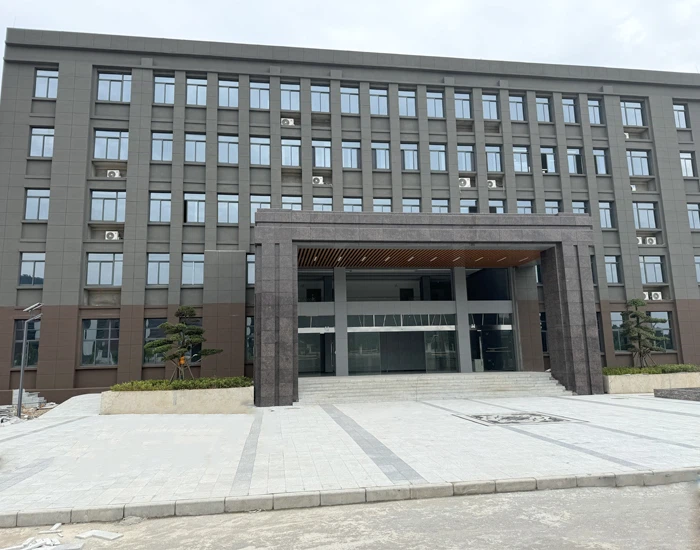
Anhui Redbud New Material Technology Co., Ltd located in Susong, Anhui Province. The company has complete set of excellent production equipment, advanced production technology and strict quality managing system.

FAQ
As one of the leading 900d oxford fabric manufacturers and suppliers in China, we warmly welcome you to buy cheap 900d oxford fabric from our factory. All customized products are with high quality and competitive price.
workwear 900d oxford fabric, protective 900d oxford fabric, attractive 900d oxford fabric