

How does 500d oxford cloth react to chemicals?
Oct 02, 2025
Leave a message
Hey there! I'm a supplier of 500d oxford cloth, and today I wanna chat about how this awesome material reacts to chemicals. You might be wondering why this is important. Well, if you're using 500d oxford cloth in any application, knowing its chemical resistance can help you make the right decisions about its use and maintenance.
First off, let's understand what 500d oxford cloth is. The "500d" refers to the denier, which is a unit of measurement for the weight and thickness of fibers in the fabric. A 500d oxford cloth is relatively durable and commonly used in various products like bags, tents, and outdoor clothing. There are different types of 500d oxford cloth, such as 500D Oxford Cloth (500D*500D) and 500D 100% Polyester Oxford Fabric.
Reaction to Acidic Chemicals
Acids can have different effects on 500d oxford cloth depending on their strength and concentration. Mild acids, like acetic acid (found in vinegar), usually don't cause significant damage. The cloth can withstand short - term exposure without any visible changes in its structure or properties. However, if the acid is concentrated or strong, such as sulfuric acid or hydrochloric acid, things can get ugly.
Strong acids can break down the fibers of the 500d oxford cloth over time. They can cause the fabric to become brittle, lose its strength, and even develop holes. This is because the acid reacts with the chemical bonds in the fibers, weakening them. For example, if you accidentally spill a small amount of concentrated sulfuric acid on a piece of 500d oxford cloth, you'll notice that the area where the acid touches starts to turn black and charred within minutes.
Reaction to Alkaline Chemicals
Alkaline chemicals, also known as bases, also have an impact on 500d oxford cloth. Weak bases, like baking soda solution, are generally safe for the fabric. In fact, a mild alkaline solution can sometimes be used for cleaning 500d oxford cloth because it can help remove dirt and stains without harming the fabric.
On the other hand, strong alkalis, such as sodium hydroxide (lye), can be very damaging. They can cause the fibers to swell and break down. Prolonged exposure to strong alkalis can lead to a significant loss of strength in the fabric. If you're working in an environment where there's a risk of contact with strong alkalis, it's important to take precautions to protect the 500d oxford cloth products.
Reaction to Organic Solvents
Organic solvents are another group of chemicals that can interact with 500d oxford cloth. Solvents like acetone, which is commonly used in nail polish removers, can dissolve some of the coatings or finishes on the fabric. If the 500d oxford cloth has a water - repellent or anti - stain coating, acetone can strip it off.
Some solvents, like ethanol (alcohol), may not have as severe an effect. Short - term exposure to ethanol usually won't cause major damage to the fabric. However, if the cloth is soaked in ethanol for a long time, it can start to affect the integrity of the fibers, making them more prone to breakage.
Reaction to Bleaching Agents
Bleaching agents are often used to whiten or disinfect fabrics. Common bleaching agents include hydrogen peroxide and sodium hypochlorite (chlorine bleach). Hydrogen peroxide is a relatively mild bleaching agent and can be used on 500d oxford cloth in low concentrations. It can help remove some stains without causing too much damage to the fabric.
Chlorine bleach, on the other hand, is much stronger. It can fade the color of the 500d oxford cloth and weaken the fibers. If you use chlorine bleach on a colored 500d oxford cloth, you'll likely see the color fade rapidly. And if you use it too often or in high concentrations, the fabric will become thinner and more fragile over time.
Factors Affecting Chemical Reaction
Several factors can affect how 500d oxford cloth reacts to chemicals. One of the most important factors is the duration of exposure. The longer the fabric is in contact with a chemical, the more damage it's likely to suffer. For example, a brief splash of acid is less likely to cause serious harm than leaving the cloth soaked in acid for hours.
The temperature also plays a role. Higher temperatures generally speed up chemical reactions. So, if a 500d oxford cloth is exposed to a chemical at a high temperature, the reaction will occur more quickly and may cause more severe damage.
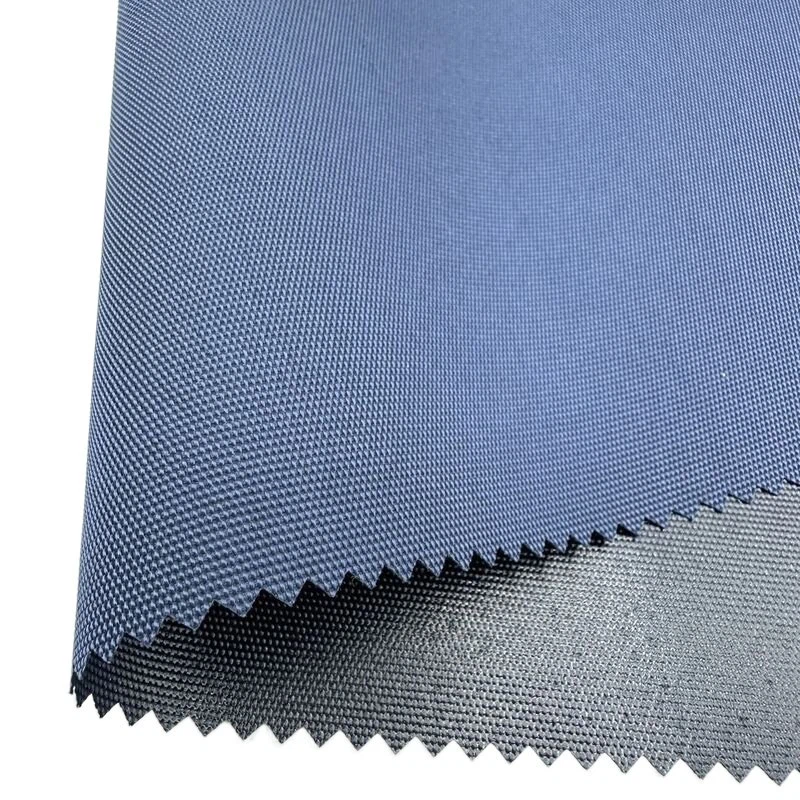

The type of fibers in the 500d oxford cloth also matters. If it's a 500D 100% Polyester Oxford Fabric, polyester fibers have different chemical properties compared to other types of fibers. Polyester is generally more resistant to many chemicals than natural fibers like cotton, but it still has its limits.
How to Protect 500d Oxford Cloth from Chemicals
If you're using 500d oxford cloth in an environment where it may come into contact with chemicals, there are some steps you can take to protect it. First, you can apply a protective coating to the fabric. There are many commercially available coatings that can enhance the chemical resistance of the cloth.
Second, you should clean the cloth regularly with mild detergents. This can help remove any chemical residues before they have a chance to cause damage. If the cloth does come into contact with a chemical, rinse it immediately with plenty of water to dilute the chemical and reduce its effects.
Conclusion
In conclusion, 500d oxford cloth has different reactions to various chemicals. While it can withstand some mild chemicals, strong acids, alkalis, solvents, and bleaching agents can cause significant damage. By understanding these reactions and taking appropriate protective measures, you can ensure that your 500d oxford cloth products last longer and perform better.
If you're interested in purchasing high - quality 500d oxford cloth for your projects, whether it's for making bags, tents, or other items, feel free to reach out for more information and start a procurement discussion. We're here to help you find the best 500d oxford cloth solutions for your needs.
References
- Textile Chemistry Handbook
- Journal of Textile Science and Technology